



Sun Wukong Bamboo Root Carving Crafts (available for download in STL format and 3D printing)
Sun Wukong (also known as the Monkey King, the Monkey King, the Monkey King, the Monkey King, and the Fighting Buddha) is a character in the classical Chinese mythological novel "Journey to the West". The inspiration for the origin of the Monkey King predates novels and can be traced back to the Indian epic Ramayana and the Song Dynasty monkey god Hanuman. In the novel, he is a stone born monkey who has gained supernatural powers through Taoist cultivation. After resisting the Way of Heaven and being imprisoned by the Buddha at the foot of the mountain, he subsequently accompanied Tang Sanzang to the West (Indian subcontinent) where the Buddha and his followers lived to retrieve Buddhist scriptures.

Jiang Taigong Fishing - Bamboo Root Carving
Jiang Taigong, also known as Taigong Wang, was a famous sage and military strategist in Chinese history, later deified as a deity in Taoism. The story of "Jiang Taigong Fishing" originates from "Fengshen Yanyi", symbolizing wisdom and patience, as well as the philosophical idea of "willing to take the bait". Created by Chinese arts and crafts master Liang Fengzhu in 2014, cleverly utilizing the natural form of bamboo roots to carve the posture of Jiang Taigong fishing and the sparkling water surface, showcasing the exquisite skills of traditional Chinese arts and crafts. It is currently collected at the Liangfengzhu Arts and Crafts Museum in Nanyue, Hengyang, Hunan Province, China. It is praised for its exquisite craftsmanship and profound cultural connotations.

Zhong Kui - Bamboo Root Carving
Zhong Kui, also known as Zhong Kui, is a famous ghost catching hero in Chinese and Japanese mythology. Legend has it that he can drive away demons and lead 80000 ghost soldiers. His image is often painted on the lintel of households as a guardian deity, and is also common in commercial places to protect valuable items. Through the technique of bamboo root carving, the majestic image of Zhong Kui is vividly depicted, reflecting the exquisite skills and cultural connotations of traditional Chinese arts and crafts. It is the inheritance of traditional Chinese culture and folk beliefs. Produced by Chinese arts and crafts master Liang Fengzhu in 2013, it showcases the image of the deity Zhong Kui in traditional Chinese culture. It is currently collected in the Liangfengzhu Arts and Crafts Museum in Nanyue, Hengyang, China.

Dragon Ball - Bamboo Root Carving
The bamboo root carving artwork created by Chinese arts and crafts master Liang Fengzhu in 1998 was inspired by the "Dragon Jaw Pearl" or Dragon Ball in the ancient Chinese legendary story "Zhuangzi: Qi Wu Lun". This work not only showcases Liang Fengzhu's exquisite carving skills, but also contains profound cultural connotations. Through exquisite bamboo root carving techniques, the form and charm of dragon balls are vividly portrayed. Bamboo root carving is one of the traditional forms of Chinese arts and crafts. Through the skillful carving of artists, artworks with unique beauty and cultural connotations are created. It is currently collected in the Liangfengzhu Arts and Crafts Museum in Nanyue, Hengyang, China.

Zhang Guolao - Bamboo Root Carving
Zhang Guo is a character in ancient Chinese mythology and is also one of the Eight Immortals of Taoism. In traditional Chinese culture, the Eight Immortals each have their own characteristics, and Zhang Guolao is famous for his longevity and miracles, and is considered one of the real figures in history. The story began around the mid to late 7th century and ended in the mid-8th century. The word 'old' in a name means elder or respectful. Created by Chinese arts and crafts master Liang Fengzhu in 1989, it is now collected at the Liang Fengzhu Arts and Crafts Museum in Nanyue, Hengyang, China. Through exquisite carving techniques, the image depicted showcases Zhang Guolao's demeanor and characteristics, making it vivid and lifelike.

Confucius bamboo root carving
Confucius was a philosopher and politician during the Spring and Autumn period in China, traditionally regarded as a model of Chinese sages. Confucius' teachings and philosophy form the foundation of East Asian culture and society, and still have influence today. His ideology emphasizes values such as benevolence, righteousness, propriety, wisdom, and trustworthiness, which have had a profound impact on the moral ethics and political theory of later generations. The bamboo root sculpture "Confucius" created by Chinese arts and crafts master Liang Fengzhu in 2005 is now collected at the Liang Fengzhu Arts and Crafts Museum in Nanyue, Hengyang, China. Using bamboo roots as the material and employing exquisite carving techniques, the image of Confucius as a sage is presented.

Liuhai Opera Golden Toad Bamboo Root Carving
Liu Hai playing with the Golden Toad is a classic image in traditional Chinese mythology. Liu Hai is one of the ancestors of the Quanzhen School of Taoism and a master of inner alchemy techniques. Often appearing together with Zhong Liquan and Lv Dongbin among the Eight Immortals of Taoism. In traditional art works, bangs are often depicted as holding a string of square hole copper coins and a three legged golden toad, which is a symbol of wealth and auspiciousness in Chinese culture. The bamboo root carving work was created by Chinese arts and crafts master Liang Fengzhu in 2000 and is now collected at the Liang Fengzhu Arts and Crafts Museum in Nanyue, Hengyang, China. Using exquisite bamboo root carving techniques, the classic scene of Liu Hai playing with the Golden Toad is showcased.
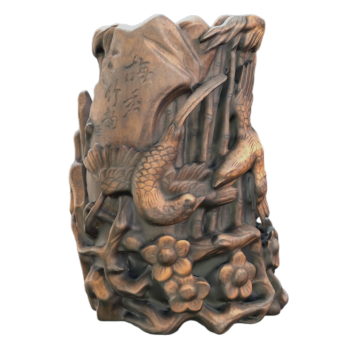
Plum Blossom and Bamboo Charm "Bamboo Root Carving
Mei Xiu Zhu Yun "is a bamboo root carving work, which was completed by Zhang Zongfan, the inheritor of Baoqing bamboo carving intangible cultural heritage, and his students. The dimensions of this work are 18 centimeters wide and 25 centimeters high. Bamboo root carving is a traditional carving art that utilizes the natural shape of bamboo roots. Bamboo root carving art has a long history in China, and it is not only a handicraft, but also a cultural heritage. From the search results, it can be seen that bamboo root carving art is still highly valued by many artists and inheritors in modern times, and is constantly innovating and developing. Through the artist's clever conception and exquisite skills, create art with unique beauty and cultural connotations

Bamboo root carving of 'Kirin'
Bamboo root carving is a traditional handicraft made from bamboo roots, mainly produced in Nanjing, Jiangsu and Jiading, Shanghai. It was once divided into the "Jiading School" and the "Jinling School". Chinese artworks made from bamboo include bamboo carvings, bamboo root carvings, bamboo bonsai, bamboo armrests, etc. In the southern region, there are dense bamboo forests growing. Bamboo, as a plant, had extraordinary significance for ancient literati. The phrase 'It is better to eat without meat than to live without bamboo' was used by the Song dynasty literary giant Su Dongpo to express his spiritual world, but it also reflects the great poet's love for bamboo.

The Bamboo Root Carving Arhat, a Lucky Lion, was created by Liang Fengzhu
Ruishi Luohan Bamboo Root Carving, a 1999 work by Liang Fengzhu, a master of Chinese arts and crafts. It is currently collected in the Liangfengzhu Arts and Crafts Museum in Nanyue, Hengyang, China, with a height of 21 cm and a width of 23.2 cm

Sending Empress Bamboo Root Carving
Bamboo root carving is a traditional handicraft, which uses bamboo root as raw material for carving creation. In 2014, bamboo root carving was included in China's intangible cultural heritage list. Bamboo root carvings are included in China's intangible cultural heritage list. This bamboo root carving carved the Chinese mythical figure Sending the Empress. In different parts of China, there are different stories and legends of the Chinese fertility goddess. Empress Bamboo is a goddess image derived from the three goddesses in the Ming Dynasty novel "Fengshen Bang. The three goddesses are the younger sisters of Zhao Gongming, the god of wealth, named Zhao Yunxiao, Zhao Qiongxiao and Zhao Bixiao. Later, these three goddesses merged into one and were called Empress Zhu Sheng.

Popular Models
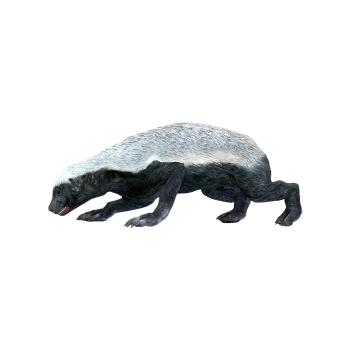
Honey Badger (3D animated model)
194 View
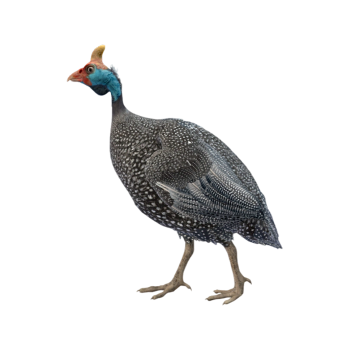
Guinea fowl (3D animated model)
165 View
Wild Goose (3D animated model)
187 View

Red Fox (3D animated model)
155 View
Random Model

3D model of oil well
1486 View

Red Christmas Gift Box
799 View
Yunzhi
989 View


Phoenix canariensis
816 View


red cabbage
543 View

3D model of pressure gauge
1058 View
